Preparation
Skills
The most important item I can stress when undertaking a project like this is to have a budget set forth and stick to that budget. Have the funds already set aside before the project is started. Nothing can be more harmful to a project then getting it well underway and then running out of money. The car will sit for many months while more funds are being raised. In the meantime other important items come up such as repairing the bathroom or taking a family vacation and before you know it the project is on permanent hold making all the work and money spent to date mostly a waste of time. Seldom are projects picked up and started moving again and more often than not the interest is lost and the car will once again sit and be forgotten as the excitement has worn off.
Gather Documentation
Once you have determined you are serious about the project you must go back to the very beginning to when the car was first acquired. By this I mean one should gather as much information, documentation, history and photos of the restoration candidate before a single bolt is loosened.
Depending on the type of restoration you will be doing will dictate what information you must gather. If all you intend to do is restore the car bearing no resemblance to what it once was and then drive the heck out of it then its history and documents are likely unimportant. However, if you intend to restore it to a show or concours level and duplicate exactly what it was coming off the assembly line then items such as color, interior type, options, etc. will be very important especially in preserving your investment.
Knowing its history will also help in explaining any hidden battle
scars that one might encounter during the tear down as well as make
it a little more interesting. It will also help in locating issues that
may be there but until now have remained unseen. The more valuable the
car the more important the car’s history, documentation, old photos,
owner history and many other items will come into play.
Reference Resources
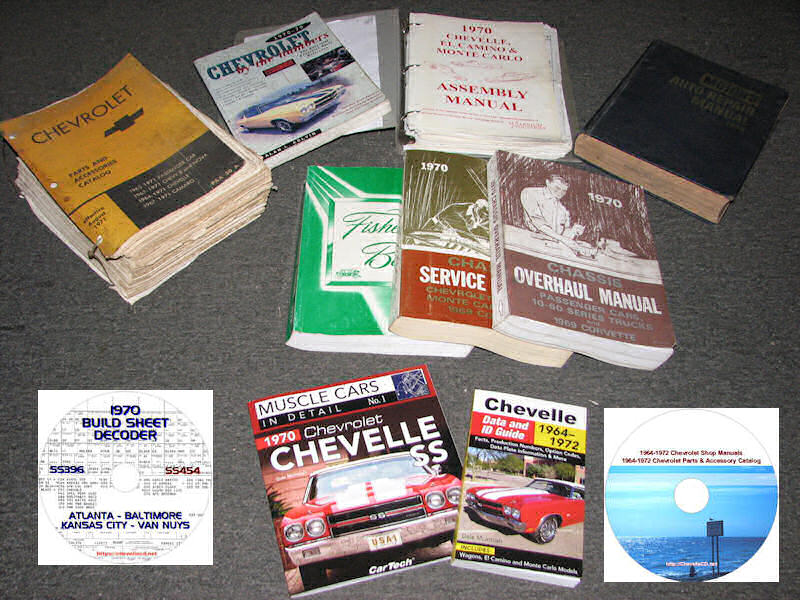
Any manuals and reference material you can
get your hands on, get it. Chevrolet printed any number of manuals for
a given model year and there are any number of good reference books
that break down information such as paint codes, interior trim codes,
engine codes, rear end codes, etc. to help you with your search for,
and restoration of, that dream Chevelle of yours.
I strongly recommend purchasing as many books and reference materials as you can afford. Items such as assembly manuals, chassis service manuals and model specific books are priceless when doing a complete restoration. Wiring schematics for your year can be invaluable. While these are fairly generic and will not cover many options they are still worth obtaining and in color if possible.
Road Test the Car
If the
car is drivable I have always found it very beneficial to take the car
out on a road test and check out every system such as brakes, heater,
radio, shifting, engine, etc. and make note of any issues no matter
how small. This will help during the restoration process so that things
like a non-functioning fuel gauge will be checked out and repaired before
the dash is restored and set back in the car only to find out you forgot
to fix it. Engine, transmission and rear end issues will also be helpful
to the rebuilder so that they can look for internal issues during the
rebuild. Telling the rebuilder that the rear end made a clunking noise
while going around a corner will alert him to make sure to find the
cause.
Thoroughly Examine the Condition
Give the car a good going over noting what can be saved and what needs to be repaired or replaced. If you find electrical things that do not work such as wipers, gas gauge, horn, turn signals, etc. it is best to fix them now if possible than to face the same issue when you are putting the car back together. If it is a wiring issue, fix it and make note of the fix so when you install that new wiring harness you can be assured the component worked before installing the wiring harness. If it is something like wipers not working, turn signals not working, etc. hunting gremlins after installing new wiring may not be the best way to go only to find out your wiper motor is bad or you have a bad ground in the light wiring. If the issue is the part itself, such as the fuel gauge or the tank sending unit, now is the time to note that and get replacement parts ordered or at least on the list of parts to find or order.
Any engine, transmission, brake, or suspension issues can be addressed
when it comes time to rebuild/replace those components.
A list with the item needing repair/replacement is handy to keep. Some
things you will need pretty quickly, some can easily wait. Components
that are relatively easy to find but will not be installed until late
in the restoration can probably wait. If you need new brake components
those can probably wait until you begin work on the chassis and suspension.
Keep a list with the items needing repair/replacement. this will help you prioritize and keep track of what you still need to buy and do. Some things you will need pretty quickly and some can easily wait. Components that are relatively easy to find but will not be installed until late in the restoration can probably wait. if you need something like new brake components, those can probably wait until you begin work on the chassis and suspension.
See Appendix A - Check List for a sample of some things to look for. Many things on the check list you will want to replace as a matter of safety such as brake pads/shoes, front suspension pieces, tires, engine belts, hoses, etc. But, do not throw those old parts away just yet. You may need them to compare the replacement items you will be buying in the future to ensure those replacement parts are correct.
Note details of the car and write them down or photograph them. If you are taking photographs be sure to also keep a notebook of the photo's file name and what it is. With an inexpensive digital camera, you can never take too many photos Check the photos often, a blurry photo that you know what it was today may not be so apparent in a year or two when it's time to put things back together.
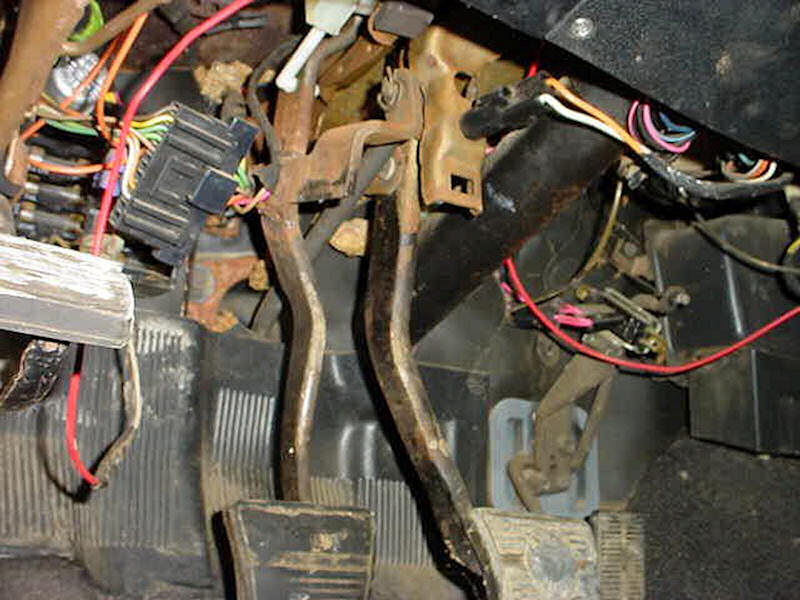
Note details such as the paint lines on
the clutch/brake pedals. While these are serviceable and can be cleaned,
make note of how much of the pedal is painted and how much is left natural.
Photos of details like this will be valuable when it comes time to refurbish
the part and reassemble the car.
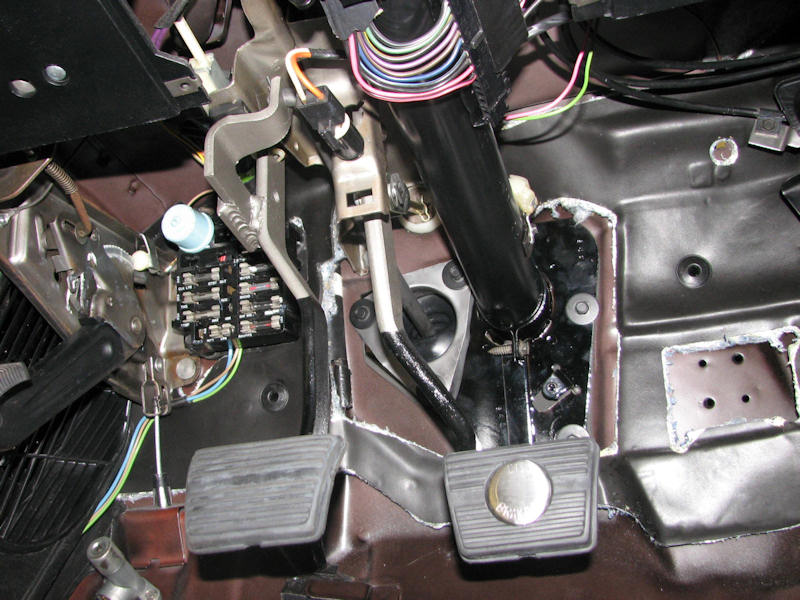
Look for details such as paint lines on the brake and/or clutch pedals, how much is left natural and how much it's painted will be very helpful when you reassemble the pieces.
You may need to send the body or frame to a specialty shop for cleaning, stripping, and in many cases, straightening but you are confident enough to do the body work and chassis assembly. You may even be fortunate enough to have paint skills and a safe place to paint your car. Even if you do not have painting skills, you can do the body work and prep the car needs to have it painted by an outside source then reassemble the car yourself, often with the help and advice of good friends. Just remember, everything you have to ‘farm out’ to an outside source adds time and money to your project.
If you are planning to buy new wiring harnesses, and you should seriously consider it since your project probably has its original wiring and it is already 50-60 years old, be sure to list all of your car's options such as air conditioning, factory gauges, power windows, etc. to insure your supplier can get you the correct harness
If you are not planning a concours type restoration but rather a modern rebuild and are considering adding accessories like air conditioning, power windows, a modern stereo system, etc. look into an aftermarket wiring kit that will handle the added electrical accessories you are planning.
| Chapter 2 - Preparation © Chevelle Restoration |
 |