Engine and Driveline
Positive Crankcase Ventilation (PCV)
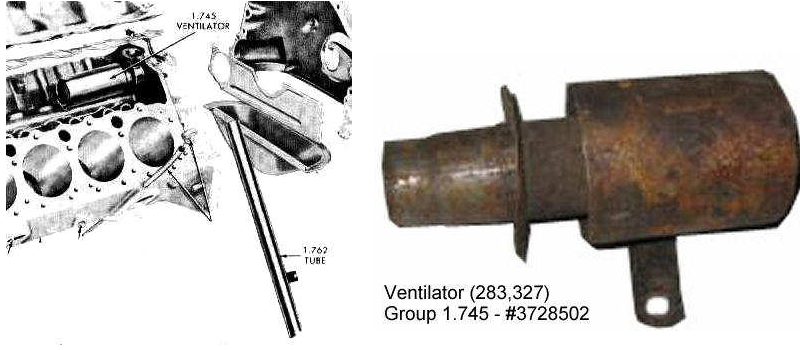
Before 1961 Chevrolet engines simply vented their crankcase gasses to the air via a draft tube that connected to a ventilator located under the intake manifold. A tube was connected to the ventilator at the back of the engine and vented the gasses out.
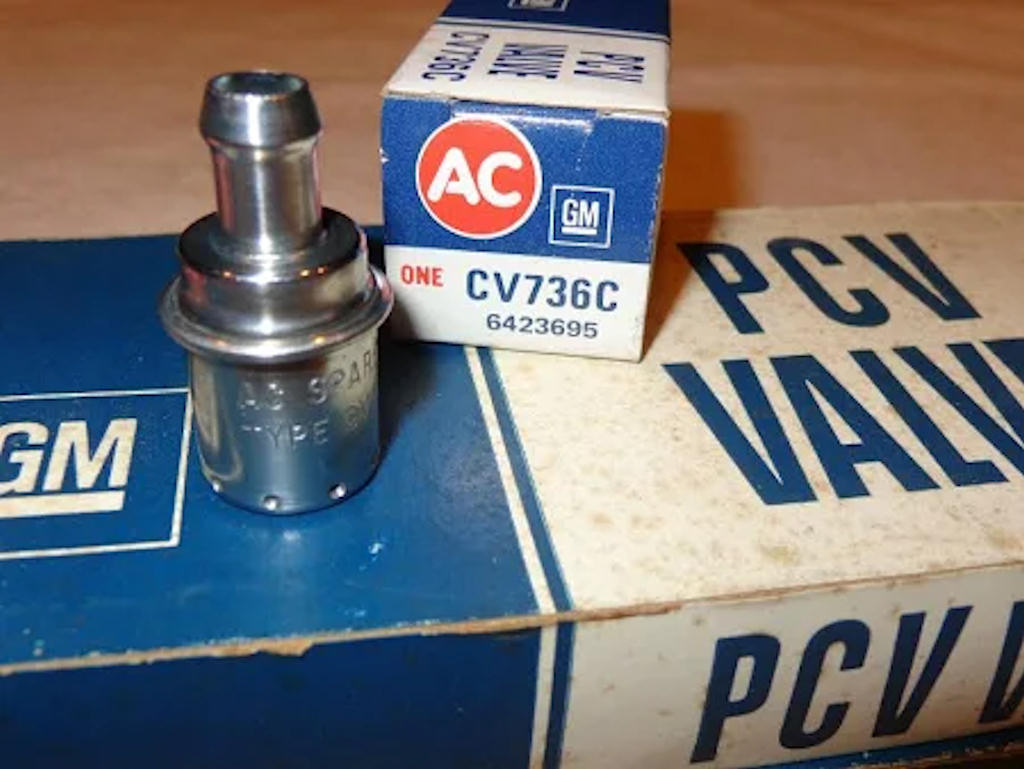
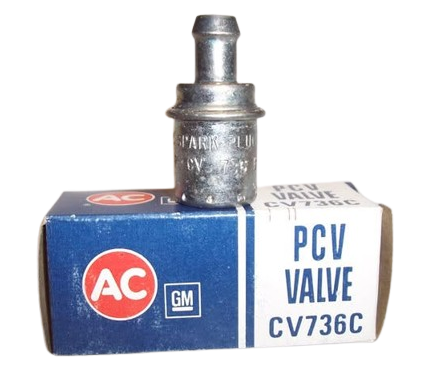
The CV736C PCV unit was used on all 1970-1972 V8 engines as well as
other year's engines.
Since the 1961 model year several methods have been used by Chevrolet to control/reduce emissions. California led the way with a requirement for the Positive Crankcase Ventilation (PCV) valve methodology. A PCV valve system was designed to reduce blow-by emissions caused by gasses that get past the piston rings and enter the crankcase causing pressure. Before the advent of the PCV valve this blow-by was simply vented to outside air through what is often called a “road draft tube” that ran from the rear of the engine block down towards the ground on V8 Chevrolet engines. When the car is moving, airflow around the road draft tube would create a draft that essentially sucked the pressured air from the crankcase. A PCV valve's main job is to control gas emissions and reroute any gas produced by the crankcase back into your engine's combustion chambers.
With the introduction of the PCV valve system this pressure and build- up of gasses was now rerouted back through the base of the carburetor to be re-burned. The PCV valve is typically placed as far away from the crankcase air inlet as possible and normally in one of the two rocker covers of a V8 engine or towards the front of an L6 engine rocker cover.
If you find an excessive amount of engine gasses blow-by on your rocker cover or a rough idling engine, chances are your PCV valve is in need of replacement.

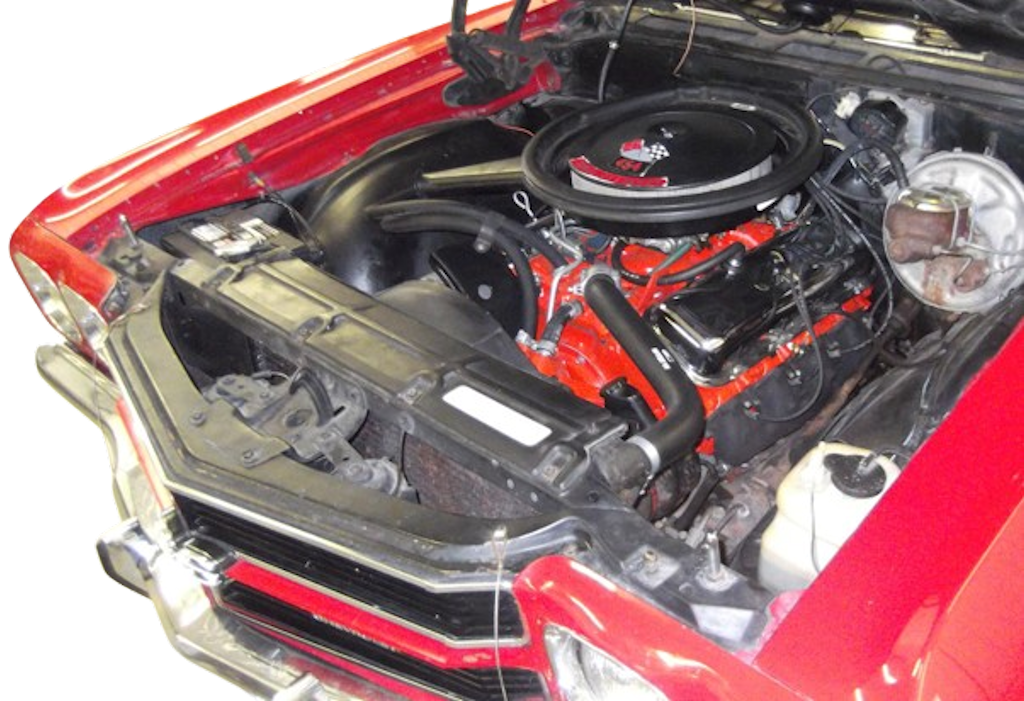
Positive Crankcase Ventilation (PCV) valves have been used by GM
since 1961 on every automotive engine. On all V8 engines the PCV
valve is located on the front portion of the driver side rocker
cover as shown on this 1970 L78 engine. - Courtesy L78 Registry