Engine and Driveline
Air Injection Reactor (A.I.R.)
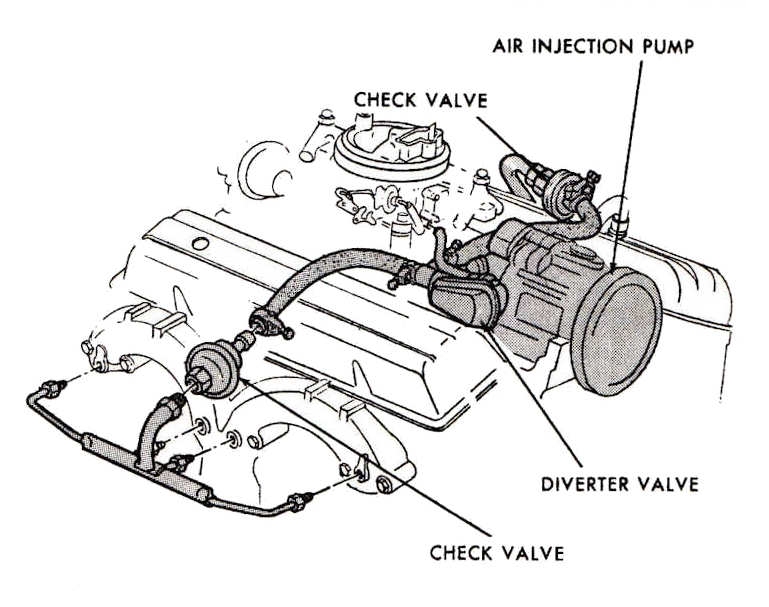
The Air Injection Reactor (A.I.R.) system was introduced on California destined cars for the 1966 model year. Its designed as an exhaust emission control system to assist in the burning of the unburned portion of the exhaust gases, thereby reducing hydrocarbon and the carbon monoxide content of the exhaust. When the exhaust gases enter the exhaust manifold they are still hot enough to ignite. When supplied with oxygen these gases will burn; the A.I.R. system supplies the oxygen.
The A.I.R. system is comprised of an air pump, a diverter valve (a mixture control valve), check valves, and combustion pipes and various hoses and fittings. Simply put, outside air is drawn into the air pump where it is compressed. This compressed air is fed out of the pump through the diverter valve and check valve into the combustion pipe assemblies and routed to the exhaust manifold resulting in additional combustion and as a result, the hydrocarbons and carbon monoxide emissions are reduced.
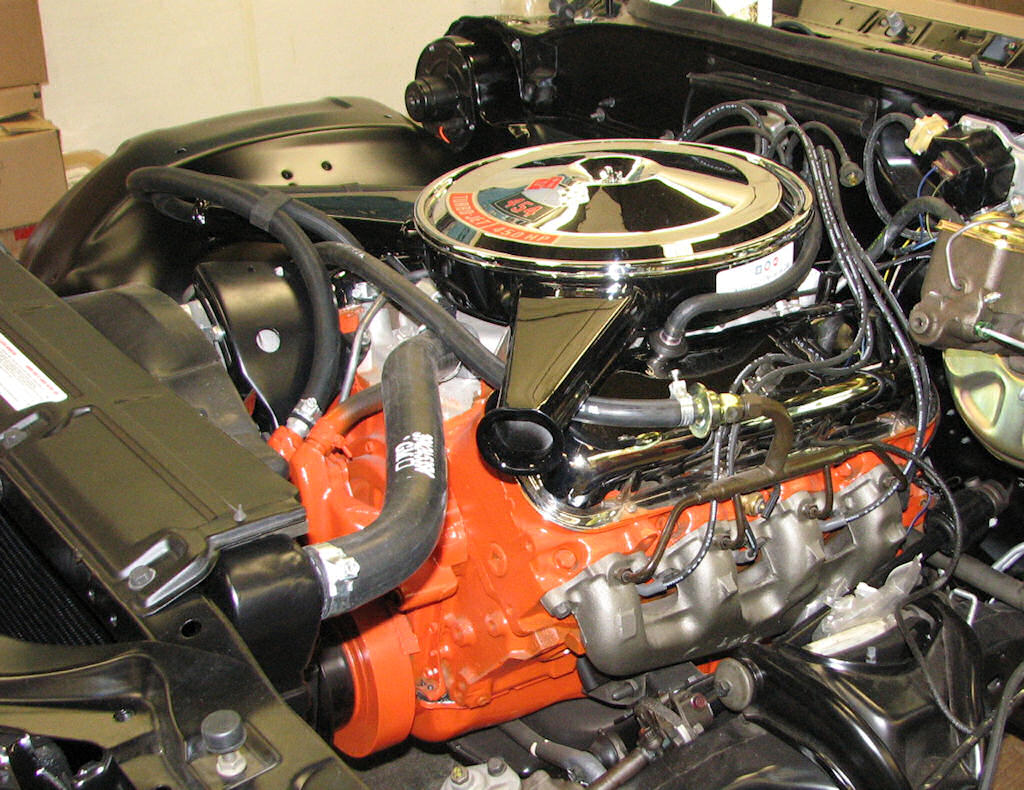
An Air Injection Reactor assembly is shown here on this 1970 LS6
engine with the pump just below the alternator.
Not all Chevrolet engines required the use of the A.I.R. system but for our purposes here, all L78 and all LS6 engines for the 1970 model year do.
Controlled Combustion System (CCS)
The Controlled Combustion System (CCS), introduced in 1968 was composed of a specially calibrated carburetor, distributor settings, higher engine operating temperatures and a thermostatically controlled air cleaner.
Carburetors for CCS-equipped engines have an idle fuel limiting feature that controls fuel mixture even if the idle mixture is turn out too far. The vacuum for distributor ignition timing advance is taken above the throttle plates of the carburetor where no vacuum is created at idle and as a result, ignition timing is retarded. Cooling systems, or to be specific, the thermostat’s opening temperature was raised from 180-degrees to 195-degrees to increase engine heat and help reduce emissions.

An early attempt at reducing emissions was devised with the
Controlled Combustion System (CCS) introduced in 1968. Note heat
tube running from the passenger side exhaust manifold to introduce
warm air to the air cleaner snorkel. Also visible on the firewall is
the TCS relay on this 1970 Chevelle.