Body & Paint
Panel Replacement
The question is, when to repair and when to replace. When restoring your Chevelle, more than likely you will come across areas that have rust and will need some metal and fabricating to repair the damage. In most cases when possible it is best to try to keep as much of the original panels as possible for integrity as well as originality. You will need to make a judgment call on what is most cost effective, repairing or replacing. Keep in mind that a lot of times reproduction panels and even new old stock (NOS) may be slightly different than the original assembly line part and even though they may be NOS, due to their age and the age of the tooling, it may not fit as nice as you would have hoped. Although they will fit up and appear to be correct, there may be subtle differences in style lines or the stamped impressions in the metal. If its important to you that your project appears to be assembly line correct you may want to take the extra effort and expense in repairing the part.
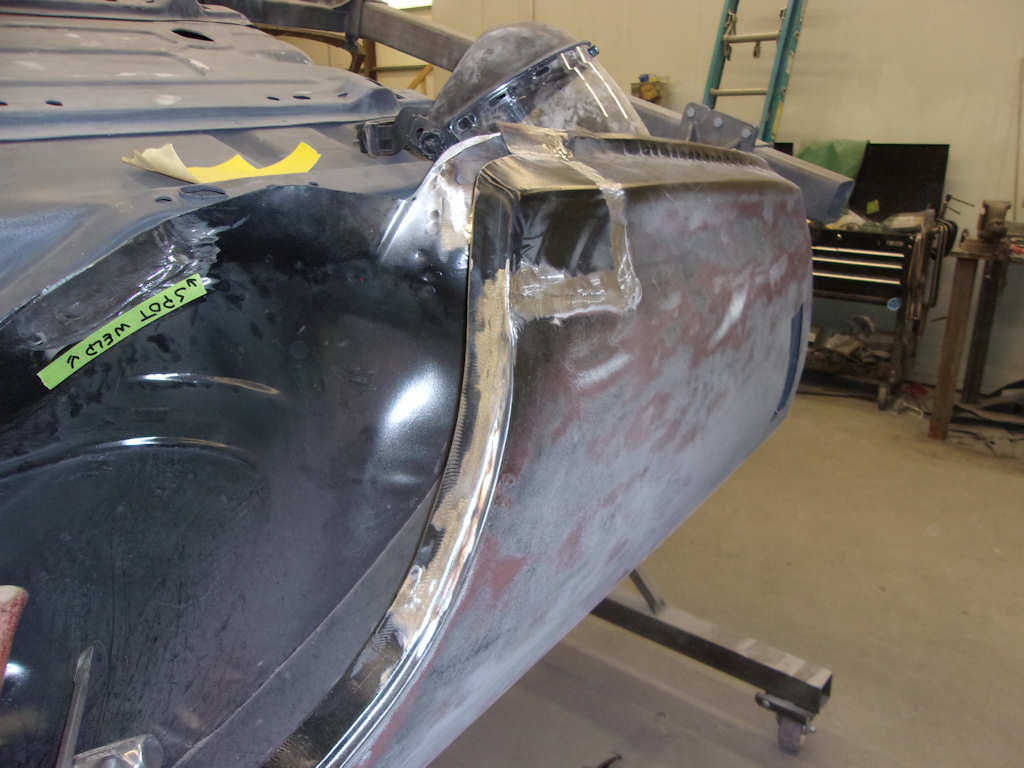
If the damage to the particular body panel is minimal it is both
cheaper and easier to do a patch repair. These can often times be
bought as well as made and make for a simple repair while still
maintaining the original sheet metal for the car.
Using an original donor panel off another car may also be a good alternative to an NOS one. There are several manufactures that reproduce complete replacement and partial repair panels. Depending on how bad your panel is, this will help you decide what is best used. If there is only a small area of rust or a little hole, grafting a small piece of a partial replacement panel would be best, easiest and the least expensive. If only the area around the actual wheel opening is rusted and originality is key, then butt welding in a repair panel will still allow you to claim your car has original sheet metal. There are several manufactures such as Auto Metal Direct (AMD), Goodmark and Dynacorn that are able to supply you with most of all the panels you will need and all have made good panels.
Metal Welding and Fabrication
When getting started with the metal and fabricating part of your restoration, keep in mind that this will be the foundation that your body work is done on top of. Like every other process how well you perform this task will determine how easy or difficult the next step will be. If you are doing this part of the restoration yourself having expensive equipment such as inverter resistant spot welders is probably out of the question. In that case plug weld will need to be used in its place. Keep in mind that no matter what type of weld you plan on using always consider using weld through primer between the flanges. Panels that are welded together are notorious for rusting. Moisture gets in between the two pieces of metal causing them to rust from the inside out. Weld through primers are generally a zinc-based product applied to the inside of the two panels prior to welding. When the weld is performed the zinc liquefies and flows between the two pieces of metal helping to protect from corrosion.
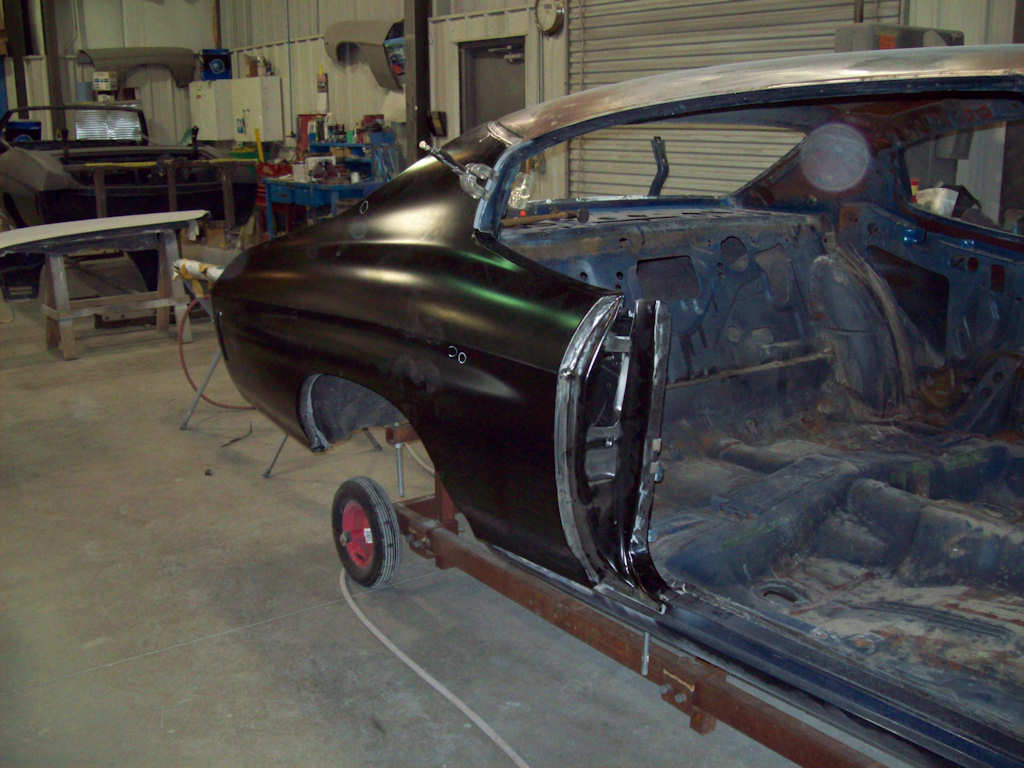
Many times the damage to a panel is so severe
that the only remedy is to replace the whole panel with an NOS (New
Old Stock) or a quality replacement reproduction panel. You will
need to decide which one is a better fix on your particular
application and budget.
Resistance spot welds (RSW) are the most common welds used on your outer body and inner structure. These welds are used to join overlapping pieces of metal by applying pressure and electric current. There are two electrodes opposite of each other that squeeze the metal using roughly 600 pounds of pressure and a large amount of electric current. The force of the weld tip will deform the metal and form a small dent or puddle as the metal gets hot making a spot weld. The size of the electrode and the amount of current used will determine the size of the spot weld. Most welders have different arms or attachments that will allow you to weld in those hard to reach areas. If you are replacing your quarter panels and are concerned with the appearance of the spot welds you may want to outsource this to your local body shop if they have the equipment.
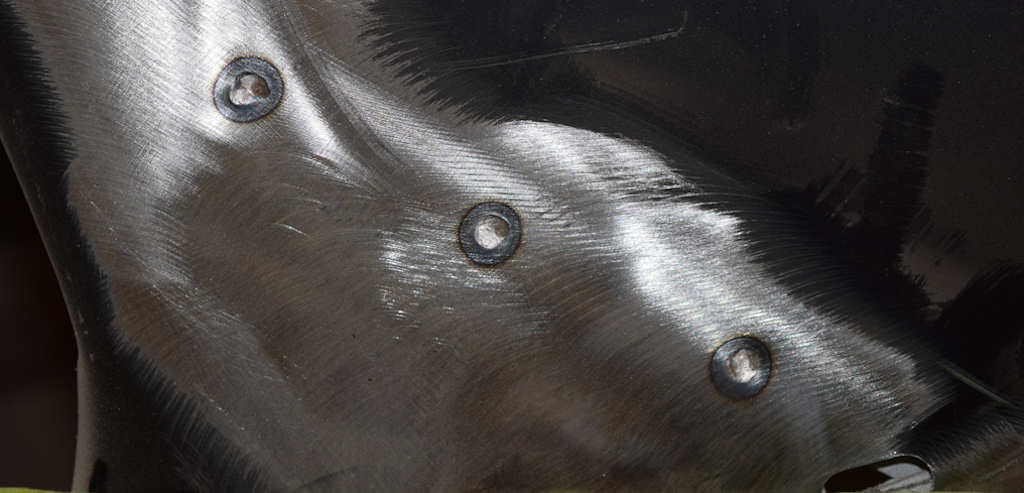
If you are doing a concours correct restoration and will be
replacing your quarter panels you will want to make sure you use a
resistant spot weld (RSW) to install them which will replicate the
appearance of what was originally done at the factory.

Make sure you document the location and how many welds were present
in that area. It is important to try to duplicate how the original
panel was installed. Also the size of the spot weld can vary
depending on what panel you are replacing.