Engine and Driveline
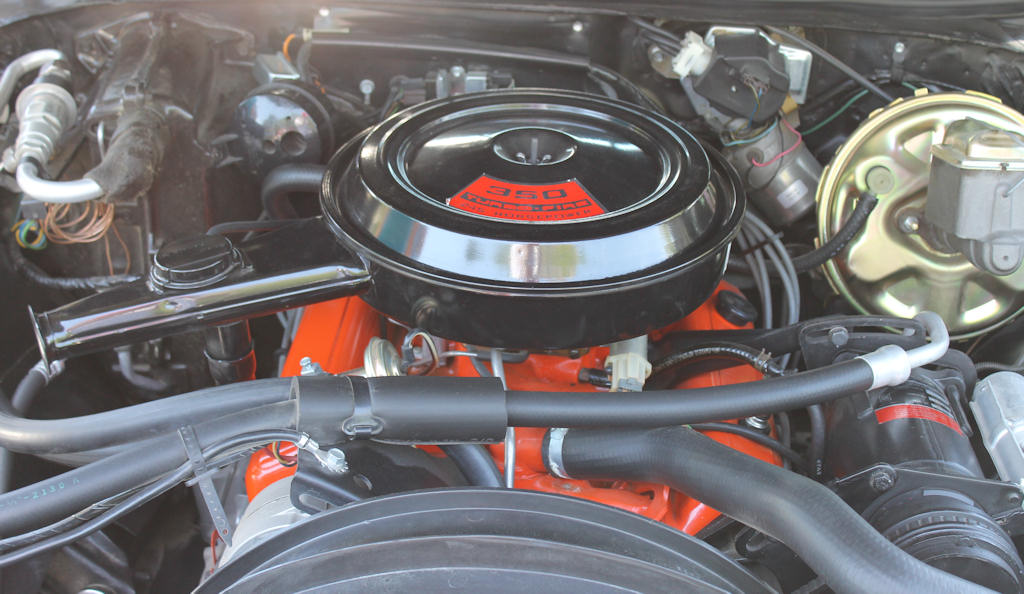
1971 RPO L65 350 cubic inch engine rated at 245 hp. The 1971
model year would be the last year Chevelles would have the engine
size and horsepower rating decal on the air cleaner lid.
All 1970 through 1972 Chevelles came with either a 250 cubic inch 6-cylinder engine or one of several V8 engines, some desirable from a collector car value standpoint and some not so desirable. While there is nothing inherently wrong with the 6-cylinder engine, the 307 cubic inch V8, or either of the two 350 cubic inch V8 engines, from a collector or value standpoint in today’s market they are not particularly sought after.
The 1970 Malibu series Chevelles with one of the three small block V8s will cost you the just about the same to fully restore as one of the two SS Equipment-optioned (SS396 or SS454) Malibu series in all areas except for possibly the engine. Machine work required for any engine is going to be comparable but the small block V8s may be less expensive to rebuild in the long run due to the large number of them built compared to either of the 396 or 454 engines.
In 1970 there were three 402 cubic inch engines. The RPO L34 and RPO L78 engines actually displaced 402 cubic inches but are referred to as “396” since that’s the way General Motors marketed them. The third 402 cubic inch engine was introduced under RPO LS3 and was rated at 330 horsepower. This engine was available in all 1970 Chevelles except those optioned with the Z25 SS Equipment option and was referred to as “400 Turbo Jet” or “400-4” in many repair manuals. This engine was the same 402 cubic inches as the venerable 396, just marketed differently. The L34 would be dropped for the 1971 and 1972 model years in favor of the LS3. The Z25 SS396 option was dropped in 1971 and the Z15 SS option was no longer engine specific.
Both 350 cubic inch Turbo Fire V8s as well as the LS3 400 Turbo Jet could be ordered with or without the Z15 option in 1971 and 1972.
Your “return on investment” just isn’t there to restore a small block Malibu to the same extent as a 396/402 optioned Malibu or LS5/LS6 optioned one. If the car holds a sentimental value to you, maybe your parents or even grandparents purchased the car new and it has been in your family for almost 50 years, it could definitely be worth holding on to. If you are not going for a complete frame-off Concours quality restoration, and your end goal is a nice weekend cruiser or daily driver, it would make sense to not invest the $70,000 to $100,000 cost to fully restore it to Concours-quality condition. Instead, freshen up the engine, replace those worn suspension pieces, new brakes, maybe replace that worn carpeting and a set of inexpensive seat covers can do wonders and not cost your children’s college fund. Any needed body work, detailing, and personal touches can be done as time and funds allow.
Generally the same can be said for particular body styles. Comparable convertibles will bring more money in today’s marketplace than a sport coupe or El Camino body style; as the saying goes “when the top goes down, the price goes up.” That is just the nature of the marketplace.
Naturally, from a purely value and collector standpoint the king of the hill has to be the 1970 RPO LS6 454 cubic inch, 450 horsepower engine in a convertible. Arguably the RPO L78 396 cubic inch, 375 horsepower engine of early 1970 would be a close second; not so much because of the L78’s horsepower rating but more due to the short production run of the engine before it was phased out in favor of the RPO Z15 SS454 Equipment option in November/December 1969 timeframe of the 1970 production year. Only 2,144 L78 engines found their way into 1970 Chevelles and only 18 of those were additionally optioned with Chevrolet’s RPO L89 aluminum head option.
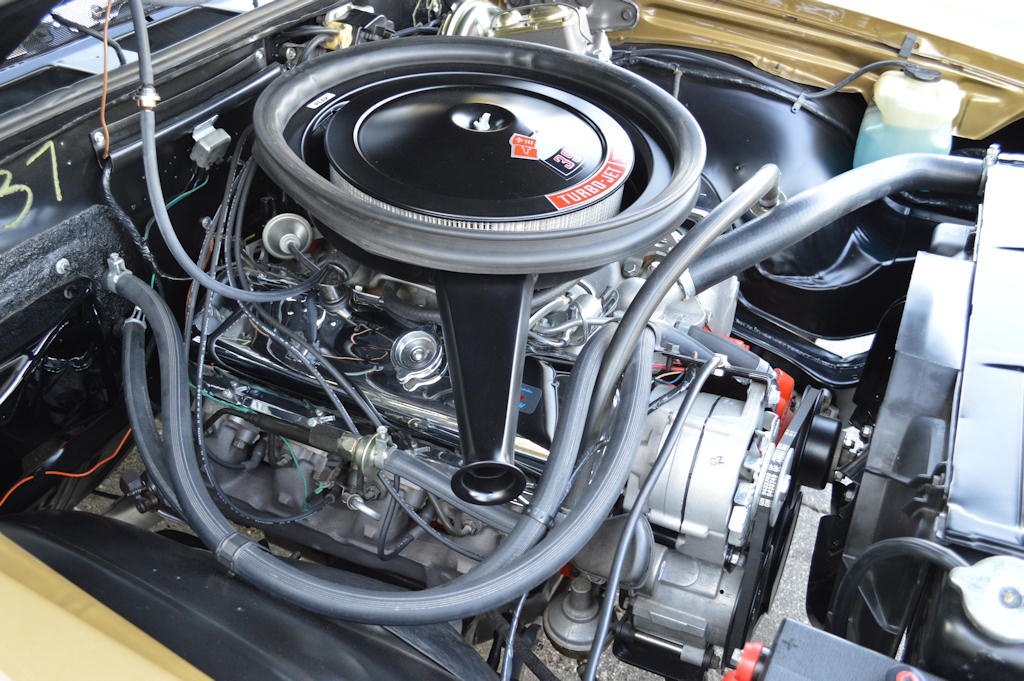
One of only 18 RPO L78 engines additionally optioned with RPO
L89 aluminum heads in 1970 making this a rare find today. Shown here
with optional ZL2 Special Ducted Hood Air System. General Motors’
Air Injection Reactor smog system was mandatory with the L78 engine.
(Photo Courtesy L78 Registry)
For 1971 and 1972 Chevelles it is a bit of a different story. The SS Equipment option (RPO Z15) became more of a dress-up option than a performance-oriented one. Any optional V8 engine and optional transmission (meaning no 307 V8 engine and no standard manual 3-speed transmission) were the only requirements to check off the, now single, RPO Z15 SS Equipment option box on the order form. The SS option in 1971 and 1972 did give you a few items that could not be ordered on any other Chevelle Malibu like the domed hood (now with hood pins standard), black-finished grille, remote driver side sport mirror, SS badging, the 15x7-inch SS wheels with F60x15 white lettered tires, and the round pod dash with speedometer and fuel level gauge over the linear speedometer of the non-SS optioned Malibus. While power disc/drum brakes were also part of the SS option, those were available on a non-SS optioned Malibu as well under RPO JL2 and J50. The same is true for the hood & deck stripes on sport coupes and convertibles (and hood stripes on the El Camino), these were optional on SS and non-SS optioned Malibus.
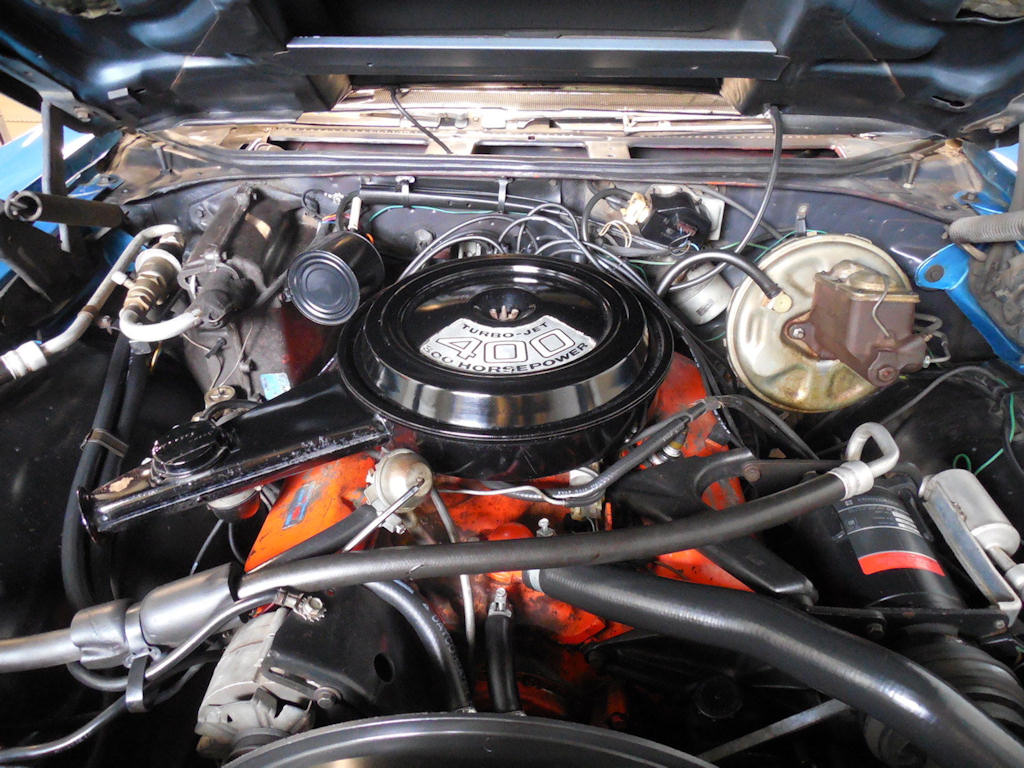
1971 LS3 402 cid engine rated at 300 horsepower. Note the air
cleaner lid decal shows "400" (Turbo-Jet) and not "402." Note also
no bright rocker arm covers or air cleaner lid.
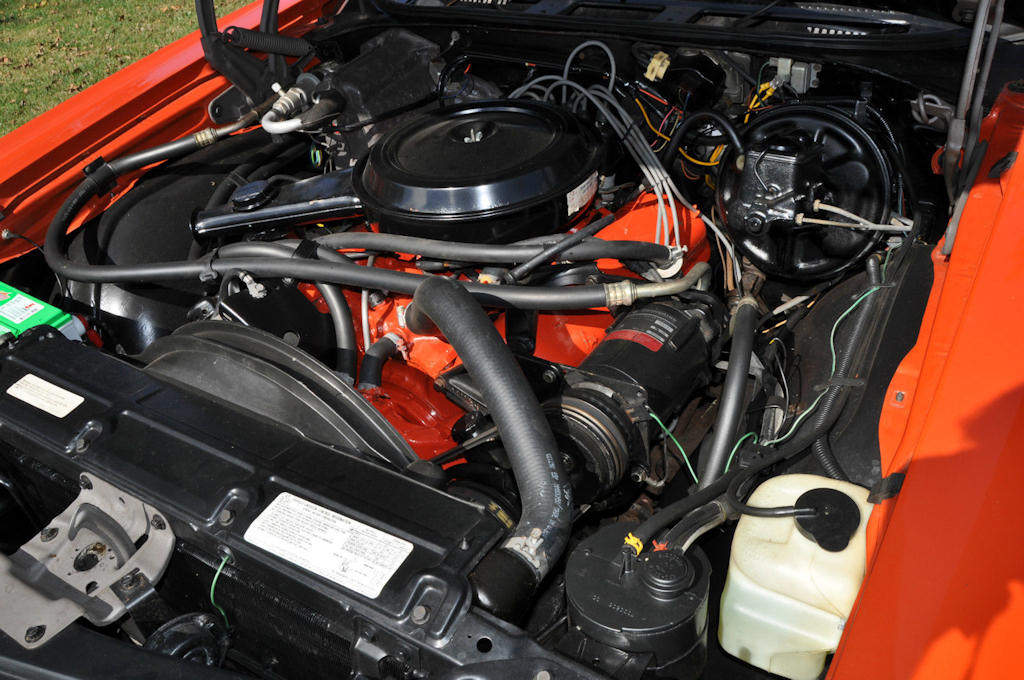
1972 version of the LS3 rated at 240 horsepower and no engine
size decal on the air cleaner lid. NO bright work for rocker arm
covers or air cleaner lid.
The optional Special Ducted Hood (RPO ZL2) was an SS-only option and only available with the LS3 402 cubic inch engine and the LS5 454 cubic inch engine. Neither 350 V8 engine could be ordered with the RPO ZL2 Special Ducted Hood option.
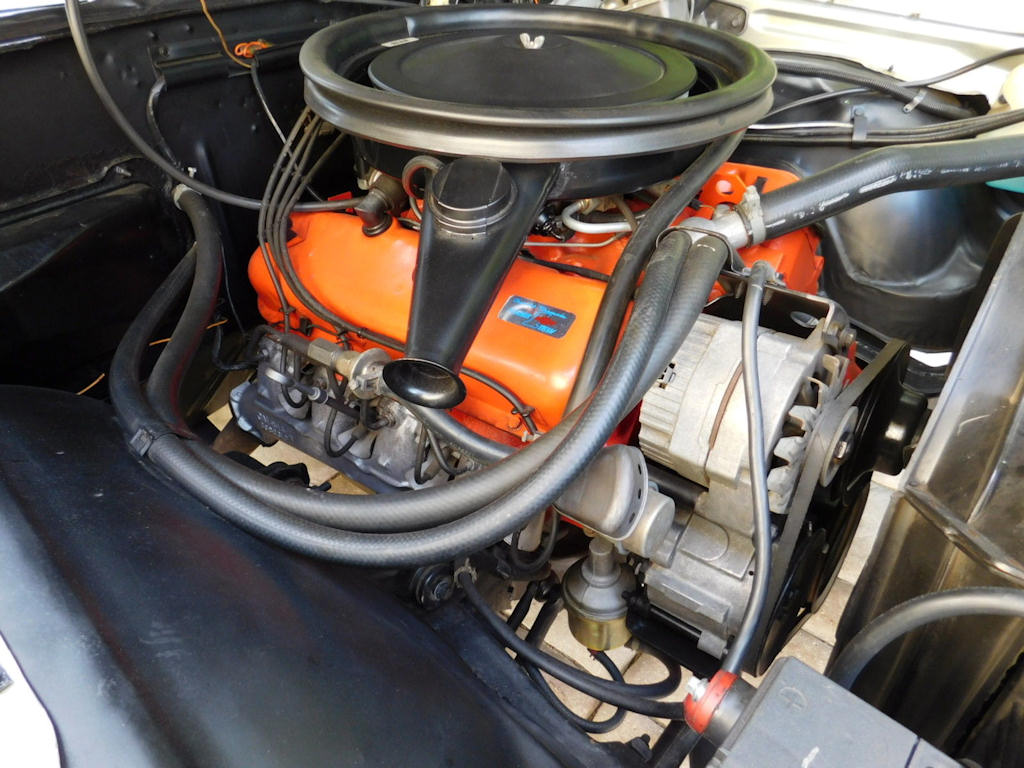
This 1972 LS5 is optioned with RPO ZL2 Special Ducted Hood Air
System and equipped with General Motors’ Air Injection Reactor smog
system. Neither the 1971 nor 1972 SS option included provisions for
any under hood chrome dress up. (Photo Courtesy LS5 Registry).
Only the optional LS5 454 cubic inch engine required the SS option in both 1971 and 1972. The other three optional V8 engines could be ordered with or without the SS option. I am sure much of this you may already know but the idea here is to help you decide what your final goal in the restoration is going to be and to hopefully help you decide what it is worth spending your time and money on based on your goal. In 1972 General Motors began putting the engine size and horsepower rating in the vehicle identification number (VIN). The LS5 engine is coded with the letter “W.” This is the only 1969 through 1972 VIN that will prove the car was ordered with the SS option. Even though the LS5 required the SS option in 1971 as well, the engine size is not coded in the VIN.