Engine and Driveline
Propeller Shaft/Universal Joints/Miscellaneous
The propeller shaft is more commonly known as a drive shaft and will be referred to as a propeller shaft. Typically a propeller shaft was left a neutral color and not painted. When restoring your propeller shaft take note of the identifying stripes and colors if they are still visible.
The width of the paint colors and the location of the stripes will vary depending on the person painting the propeller shaft stripes. In these two examples, both have orange, pink, and blue stripe colors. But note the difference in the distances between the various colors, particularly the pink and blue color stripes.
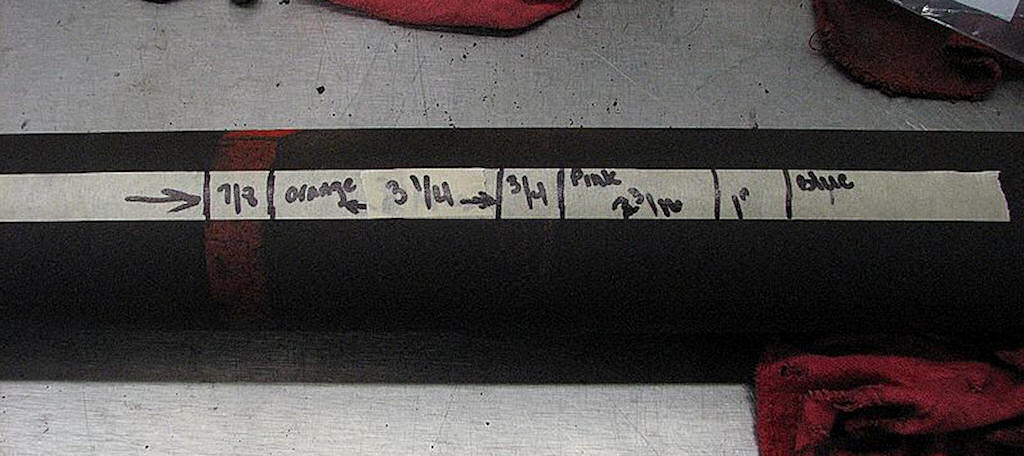
Before refurbishing your propeller shaft, take care to mark the
location and width of the color coded stripes if they are still
visible. The position and width of these color stripes will vary
depending on the person identifying the propeller shaft’s intended
use. See Appendix D.
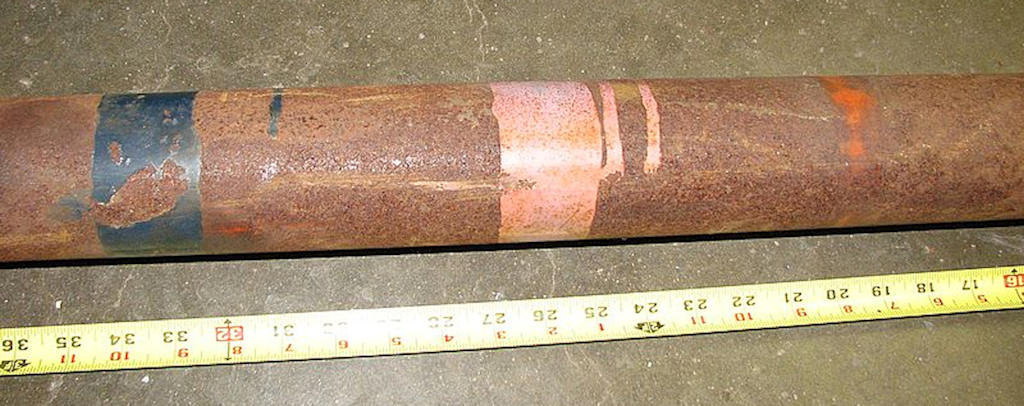
Use a ruler to note the location and width of your original
colors.
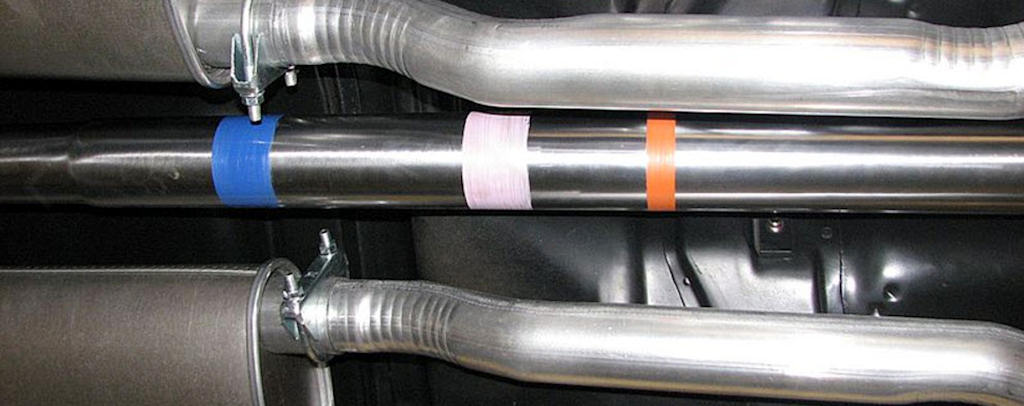
Refurbished propeller shaft, cleaned and appropriate color
stripes reapplied in their original positions and original widths.
The propeller shafts are left natural but can be clear coated to
help combat rust on your restoration.
Different applications have different color stripe schemes. Assembly plants even differed on how they depicted the propeller shaft colors on their build sheets. For example, for the 1970 model year the Baltimore assembly plant used a 2-letter code for their propeller shaft colors such as “GO” for green and orange while Arlington, Atlanta, Kansas City, and Van Nuys used two 2-letter codes such as “GR-OR” for the same green and orange. A manual transmission car propeller shaft was color-coded different than one destined for an automatic transmission and SS396 engines (both L34 and L78) propeller shafts were different than those destined for SS454 (both LS5 and LS6) engines. Due to the frame being longer with the El Camino body style, those color codes were different than those for the sport coupe and convertible.
Why were the propeller shafts color coded with different stripes? Simply so the assembly line worker could look at the code on the build sheet and get the correct propeller shaft off the shelf for a particular engine/transmission/body style application. See Appendix D - Propeller Shaft Colors for more information.
Universal joint installation methods varied over the years. Some will use an E-clip set into a groove on the outer ears of the propeller shaft yoke, some utilize a C-clip on the inner portion of the universal joint and all 1970 454 engine-equipped Chevelles use a plastic injection although you’ll find many that have been replaced with those with an E-clip style. It is always a good idea to replace these whether they look worn or not. Now is a good time while everything is apart and readily accessible. Rear u-joints have two methods of bolting to the rear end pinion yoke. One is with two U-bolts and nuts and the second is with straps and bolts.
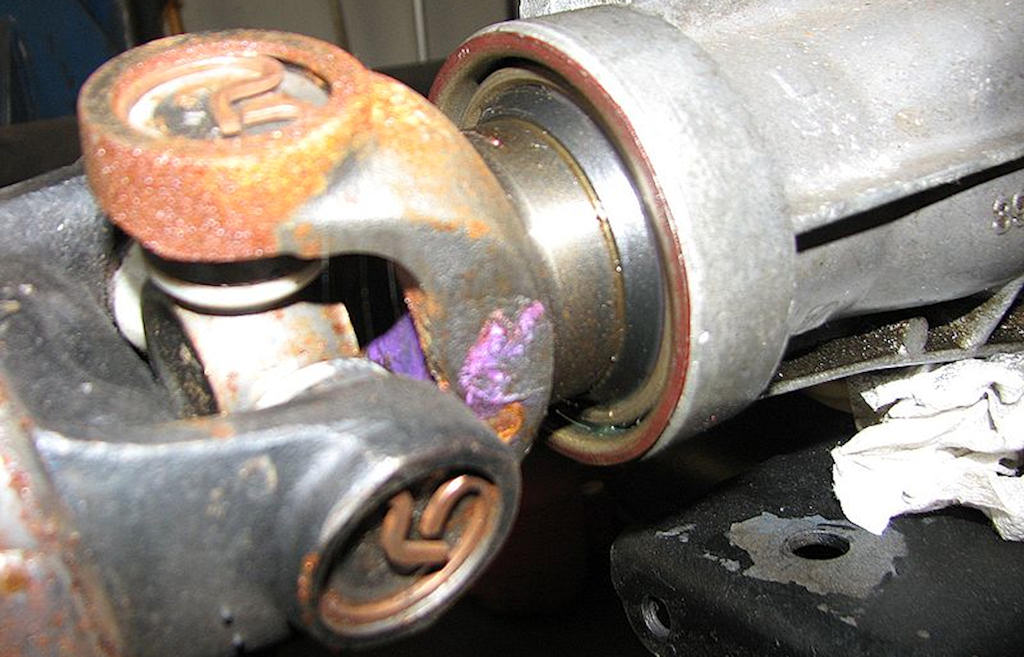
Front universal joint on an LS5 with M22 4-speed transmission.
Often aftermarket universal joints use this type of E-clip retainer
since using the correct plastic injection method was hard to
duplicate and not many shops offered the service.
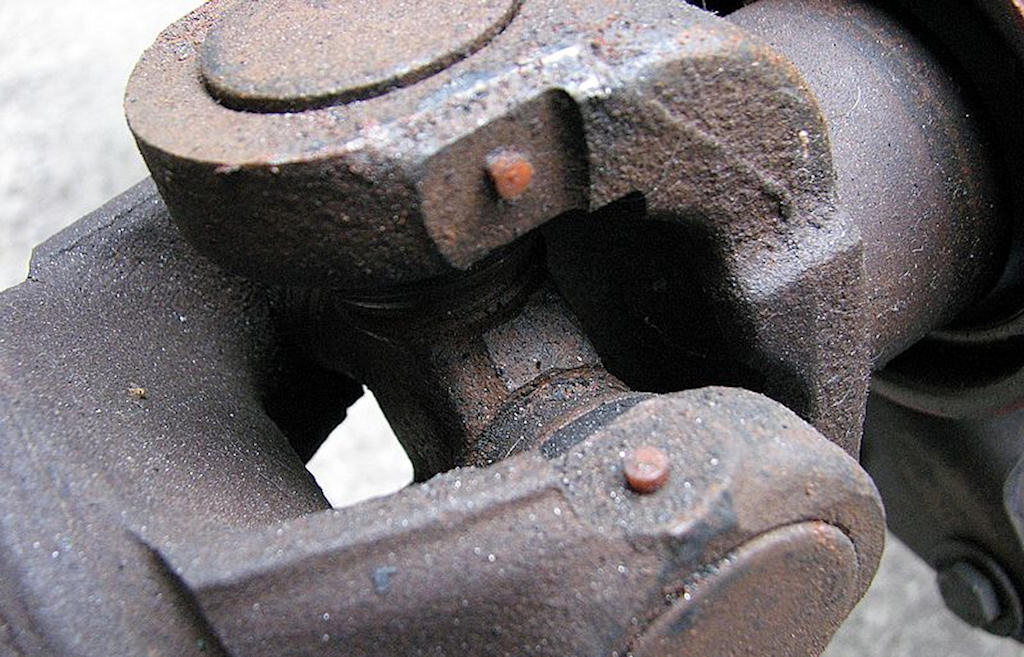
Close-up photo of original plastic injection method of retaining
universal joint on an LS6 Chevelle. Replacement universal joints
available at your local auto parts store may not be of this type as
they require more work to install correctly.
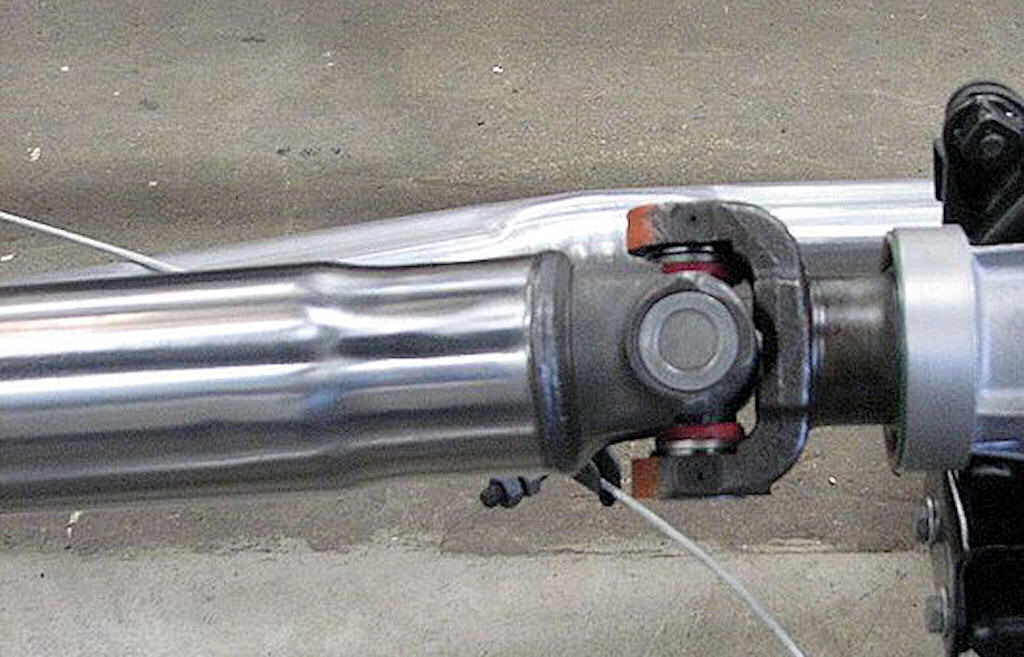
The front universal joints are assembled with the injected
plastic. Note the daubs of paint on the pinion yoke signifying it
has been inspected and installed to specifications.
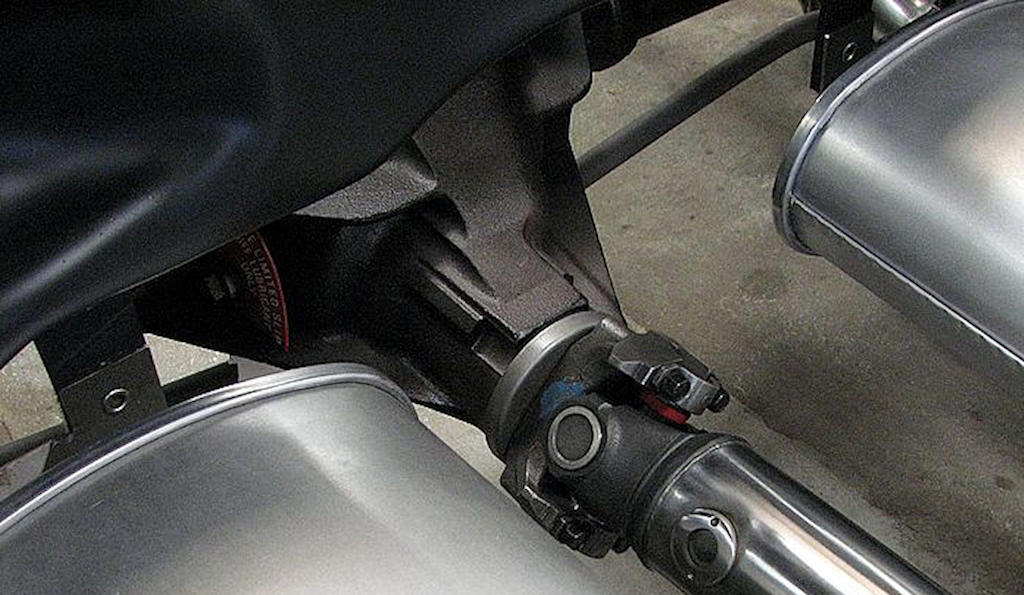
Paint daub colors can vary from plant to plant. Here the rear
yoke has blue paint daubed on the pinion yoke and an orange paint
daub on the universal joint itself.
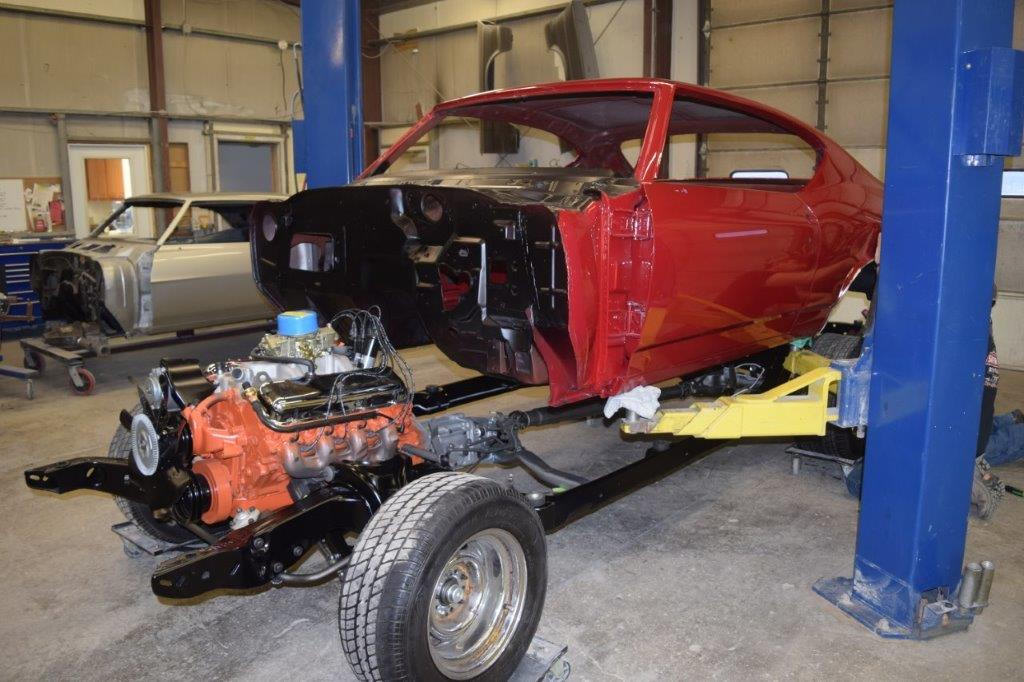
Asymmetrical hoist
Once you are satisfied with the driveline/chassis restoration, it is time to mate the rolling chassis with the body. Just how the body is mated with the rolling chassis will depend on the equipment you or your shop has.
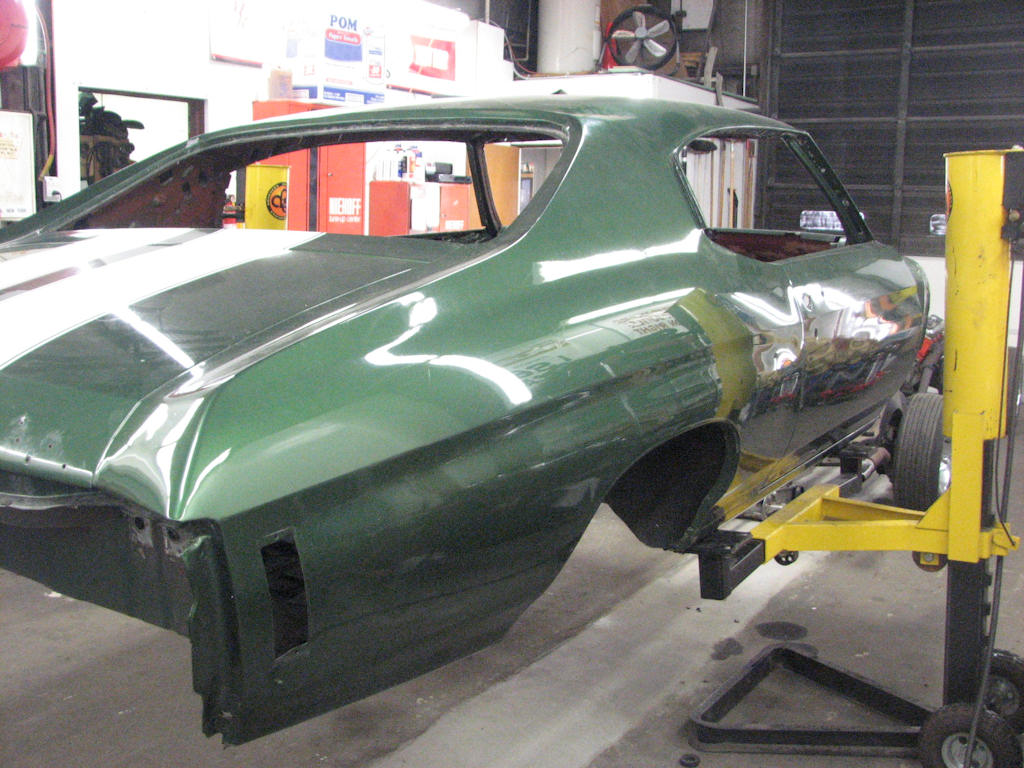
Air bumper jack (requires 2)
If you or your shop does not have an asymmetrical lift as shown in the photo above, a pair of hydraulic floor lifts can be used. A hydraulic or electric lift of sufficient lifting capacity certainly makes it easier to marry the two than 8-10 of your friends trying to manhandle the body into position.
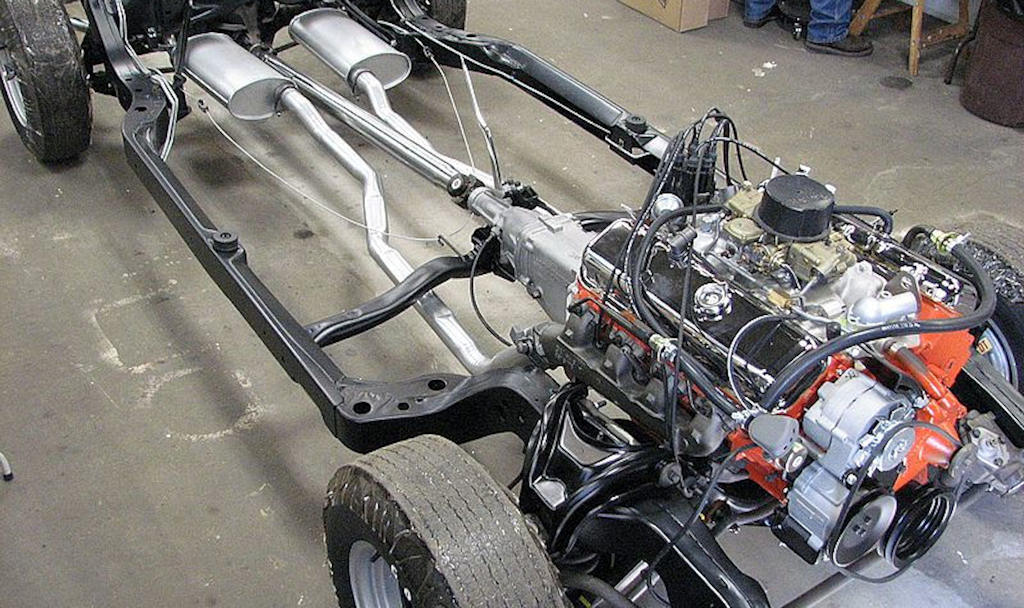
Restored and completed rolling chassis ready for the restored body
and interior to be installed. Only a few ancillary items like the
fan remain and are installed after mating the rolling chassis to its
body.
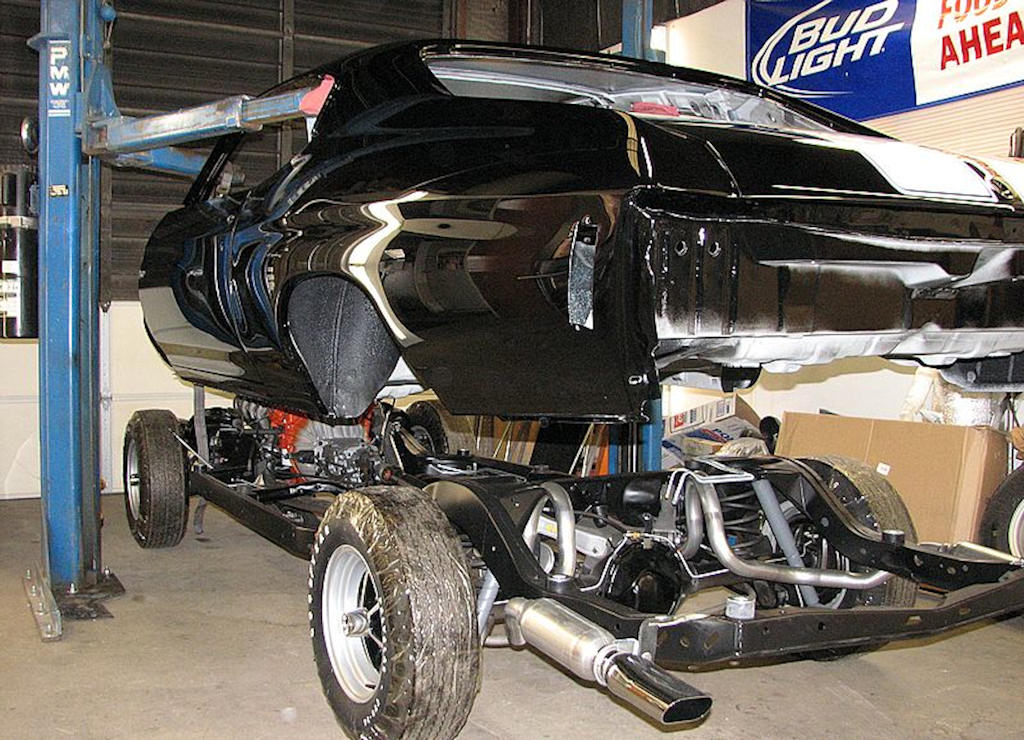
If you or your shop had the ability to remove the body, now is
the time to mate the body back on the completed, restored rolling
chassis with engine and transmission installed.
Miscellaneous
Finishes
Components may have different finishes depending on the plant and/or time of production and miscellaneous variations may even escaped our detection. Be sure to note, if possible, what yours has.
Engine block/heads paint
Starter housing
Distributor housing (paint daubs)
Brackets and braces
Master cylinder/brake lines/distribution block
Power brake booster
Hood hinges and springs
Alternator housing (finish and stamp)
Exhaust manifolds
Transmission and shifter assembly
Propeller shaft (natural)
U-joints (paint daubs)
Rear end housing (natural and black)
Numerous engine clips
Engine Tune-Up Labels
An engine tune up label is affixed to the radiator support, typically on the driver side of the car. The label is specific for the particular model year and engine size.
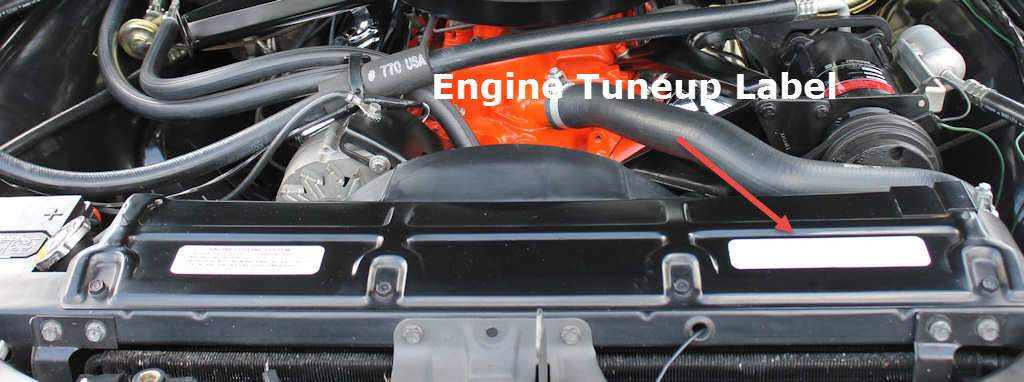
Normally the engine tune up label will have information on for both a manual and automatic transmission. One oddity is the 1970 L34 SS396 engine tune up label; different broadcast codes were used for an L34 with manual transmission and an L34 with automatic transmission even though both labels contain information for both transmissions.
To add confusion, plants used one broadcast code on L34 engines with an automatic transmission through March 10 and then changed the broadcast code for the tune label from March 11 on. See Chapter 9 for more details.